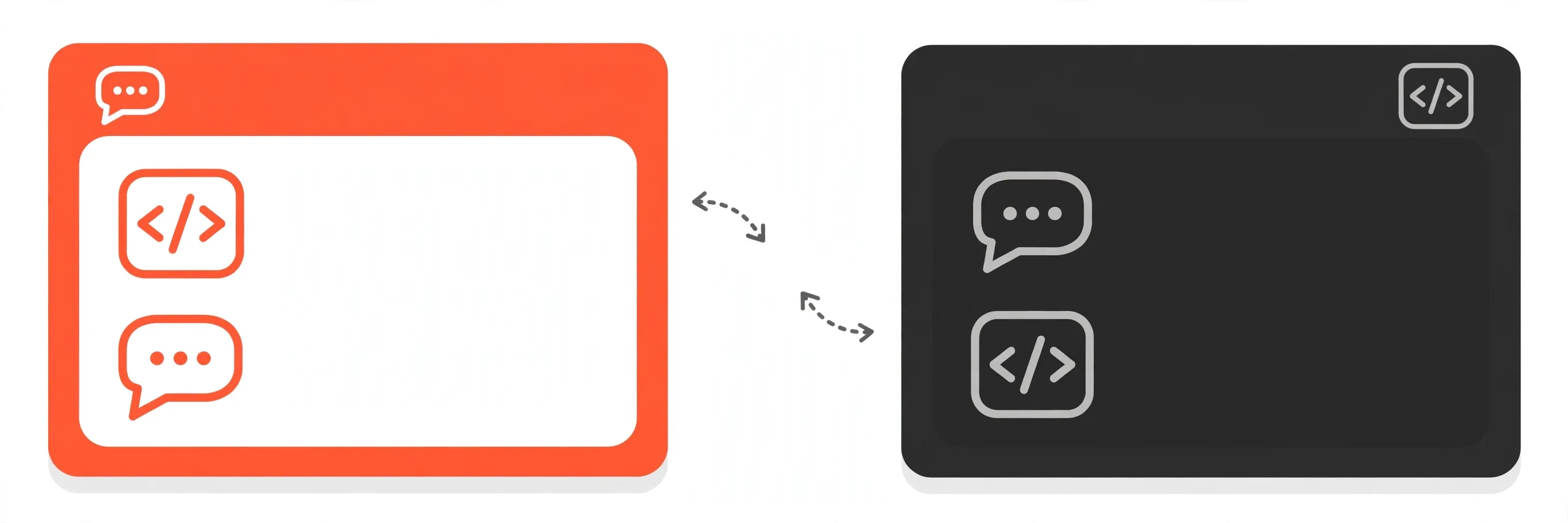
In June 2026, the same $200 a month would have bought you more AI work on Codex. By October, it bought more on Claude. Nothing about the price changed. The allowance did. It is still $200 against $200 today: Claude Ultra at $200 a month (formerly Max 20x) against ChatGPT Pro 200 at $200 a month.
This is a buying decision, not a developer benchmark. If you pay for AI tools for your small business or agency, this guide explains what flipped, what the numbers behind a subscription actually mean, and how to use the lead while it lasts — without rebuilding your business around one plan’s limits.
A note on figures in this post: the $200 prices are verified against the providers’ own pricing pages, checked November 17, 2026. Exact dollar values for what that $200 was worth are not in this post — the SemiAnalysis report that priced them is paywalled, so its figures could not be checked against the primary source. Check the current allowance on each provider’s own pricing page before you buy.
TL;DR
- In June 2026, Codex gave you more allowance for $200 a month. By October 2026, Claude gave you more — for the same $200.
- API value is what the same usage would cost if you bought it through the API, token by token. It is not finished work, and it is not a quality test.
- The lead flips with every model release. Use the plan that is ahead now, keep your workflows transferable, and do not lock in.
- Check the current allowance on the provider’s own pricing page before you buy — limits change without notice.
Table of Contents
- The flip, in plain English
- What API value actually means
- What to do this month
- The trap: don’t rebuild around one plan
- FAQ
- Sources
The flip, in plain English
SemiAnalysis, in its report “The $200 subscription flip”, priced each plan’s usage allowance at that company’s own API rates. In June, Codex gave you more allowance for $200. By October, after a new Claude model, Claude gave you more.
What has changed since then: OpenAI says the planned reduction to the ChatGPT Pro 200 allowance is canceled — lower allowances doubled to match, and the price stays $200. Anthropic says the Max 20x plan is now called the Ultra plan, with no price change. So the plan you are comparing today is Claude Ultra, formerly Max 20x, against ChatGPT Pro 200. The names moved. The $200 did not.

The lead flips with every model release. That is the point — and the warning. For coding work specifically, the same flip logic applies to the tools themselves — see Devin vs GitHub Copilot for a small team.
What API value actually means
API value is what the same amount of usage would cost if you bought it through the API, token by token. A subscription gives you a monthly allowance at a flat price. When the allowance is generous relative to API prices, the subscription is good value.
It is not a measure of finished work, and it is not a quality test. Two plans can have very different API values and still produce similar work, if one model is more efficient or better at the task. If you do not use your full allowance, the headline value matters less than whether the tool fits your day. If you want a comparison for your own day-to-day tools, see ChatGPT vs Gemini for small business.
What to do this month

- Use the plan that is aheadnow — if you do heavy agent or coding work, check the current allowance first.
- Keep your workflows transferable — prompts, checklists and processes that work in one tool should work in the other. That is the same discipline as our guide to business process automation: map the process first, then choose the tool.
- Keep both tools ready — do not cancel the other plan the week the lead flips, because it flips back.
- Measure your own use — if you only use a small share of the allowance, the headline value matters less than fit. Our plain-English guide to agentic AI for small business owners explains where agents help and where they are still early.
- Automate the repeatable work first — see our guide to automating customer emails with AI without a developer.
The trap: don’t rebuild around one plan
The worst move is rebuilding your whole business around one plan’s limits, then watching the next release flip the lead. Providers can change limits at any time without notice. If you are a Canadian business weighing the rules as well as the price, read our AI governance guide for Canadian businesses. Buy the work you need this month, keep the process portable, and re-check when a new model lands.
FAQ
Is Claude really several times better than ChatGPT?
No. A higher API value for the allowance is not the same as better work. Compare quality on your own tasks, not on a headline number.
Should a small business switch plans every time the lead flips?
Usually not. Switch when your actual usage is high and the saving is real, not on a headline number alone.
What if I only use a little AI each month?
Then a lower tier is likely enough, and the $200 comparison matters less than which tool fits your workflow.
Sources
- SemiAnalysis, “The $200 subscription flip”. Exact figures from that report are not in this post, because the report is paywalled.
- Anthropic, Claude plans and pricing — Ultra $200 a month, Max $100 a month, Pro $20 a month ($17 a month billed annually). Checked November 17, 2026: claude.com/pricing. Anthropic, What is the Ultra plan? — “The Max 20x plan is now called the Ultra plan,” $200 a month, no price change.
- OpenAI, About ChatGPT Pro tiers — Pro 200 $200 a month; “The reduction announced in our September 29 email is canceled,” price stays $200 a month. Checked November 17, 2026: help.openai.com — About ChatGPT Pro tiers.
Recommended
Start with Business Process Automation: A Practical Guide With AI, then read our agentic AI guide and ChatGPT vs Gemini for small business.
TrendswithAi is independent and has no affiliation with, or sponsorship from, Anthropic or OpenAI. Claude and Codex are trademarks of their respective owners.

